

01 · Domestic
The Bill
Where most citizens meet the engine: a monthly number and a reminder that the system has not stopped.
Singapore's energy transition, observed. A complex energy-transition story, reframed as a quiet civic publication through content strategy, editorial design direction and AI-assisted visual storytelling.
The cathedral wants to be looked at. The engine wants to be forgotten.
Most energy stories are told in the language of crisis or triumph. This one is told in the language of attention. The work being done over the next few decades will be successful if no one notices it: the lights stay on, the bills arrive, nothing makes the news.
The publication is an act of pointing: at what is working, and at what it costs to keep it working. That single observation drives the title, the structure, the voice system and every visual decision that follows.
The engine is quiet on purpose. The publication is written to look.
// Synthminds reframed dense energy-transition material into The Quiet Engine: a publication system with narrative architecture, a three-voice system, a locked visual language and a completed digital reading experience.
The source challenge. Energy-transition material is heavy with targets, infrastructure and policy language, and competes with itself for attention.
The build. An original publication concept: six scales of attention, a three-voice system, a Four Switches reference spread and a restrained visual language.
The outcome. A deployment-ready editorial system realised as a publication and completed digital reading experience, with reusable structures for report and presentation formats.
Redaction note: It is a strategic editorial reframing, authored by Synthminds. It is not affiliated with any government agency and does not imply official approval, commissioning or endorsement.
// The bill, the block, the bay, the strait, the region, the horizon. Six scales, each carrying one job for the reader.
Where most citizens meet the engine: a monthly number and a reminder that the system has not stopped.

The building becomes a small power station. Rooftops and common areas become participants in the grid.
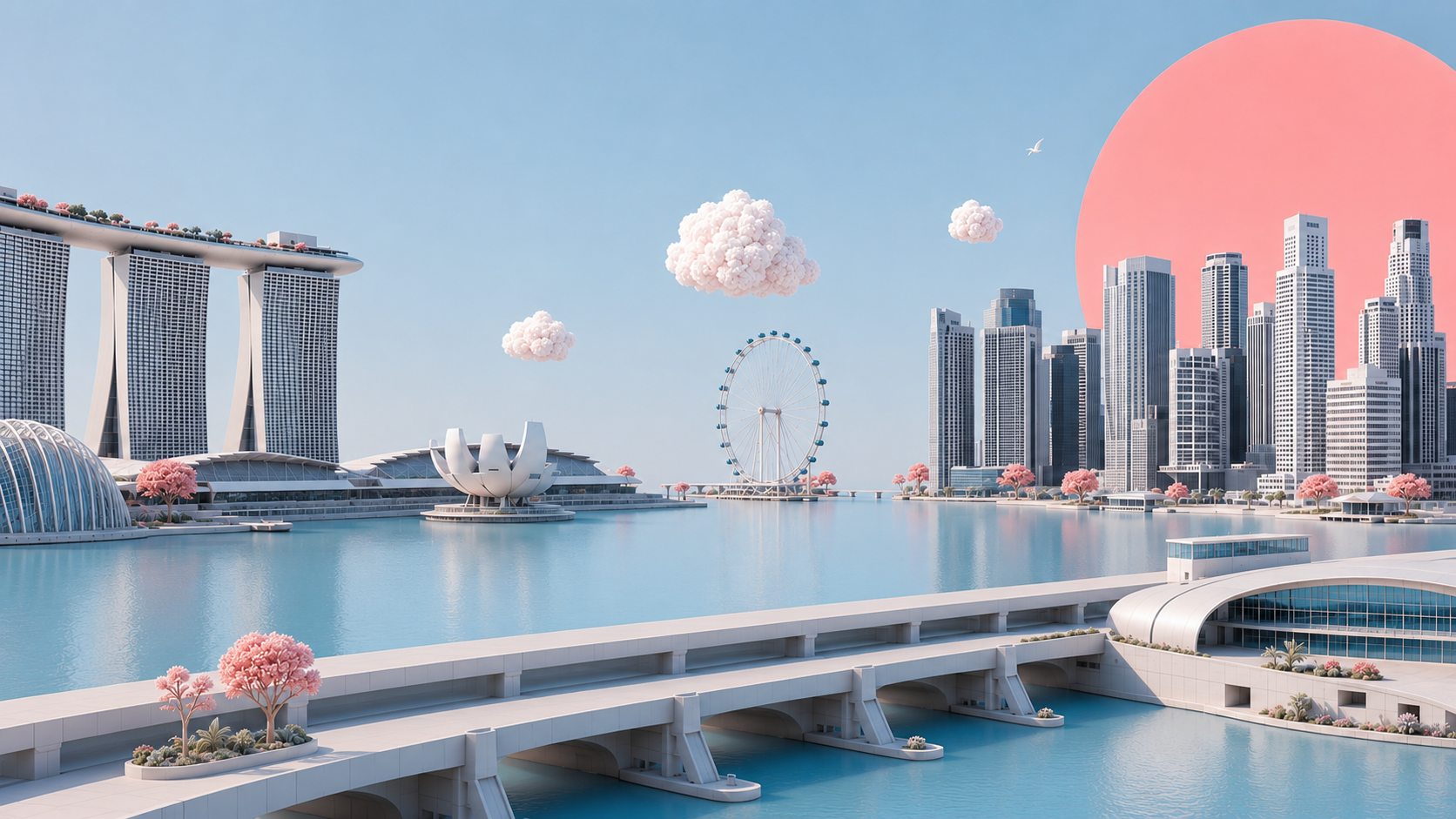
One structure, four jobs: dam, reservoir, solar demonstration and habitat.
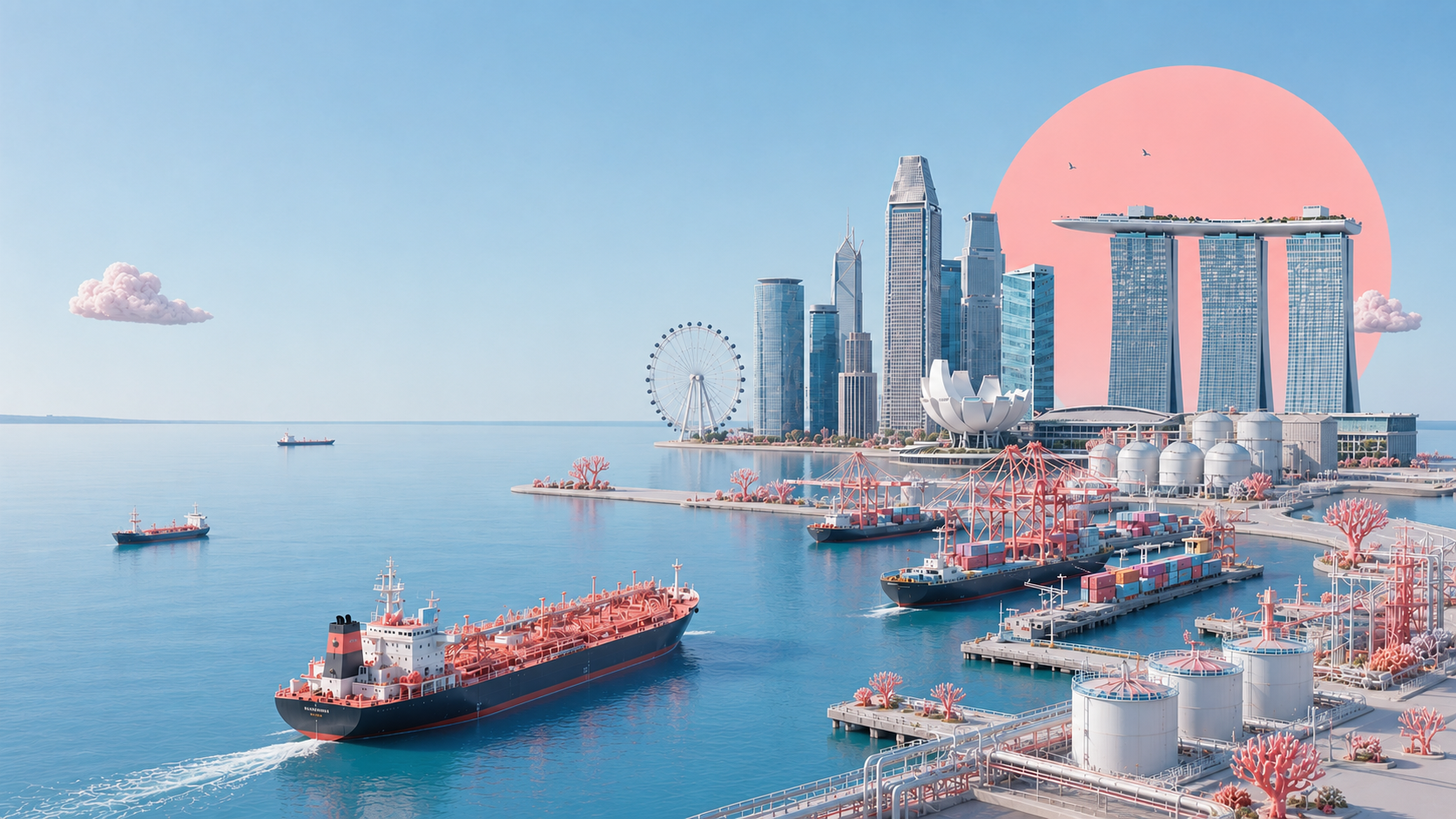
Energy security is not a wall around the island. It is a network of routes, ships and relationships.
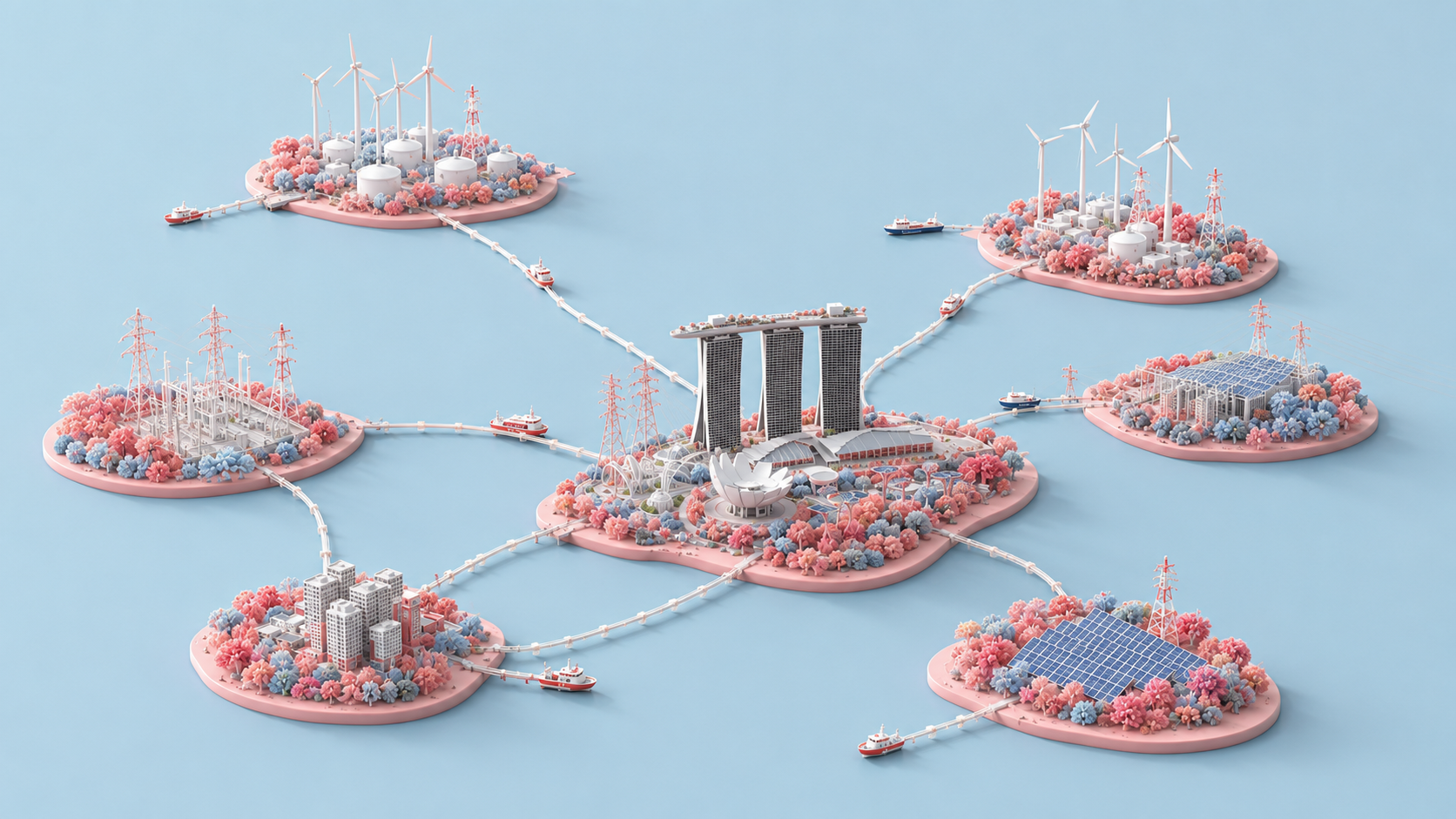
The grid stops being national. Cables, agreements and neighbouring systems enter the story.
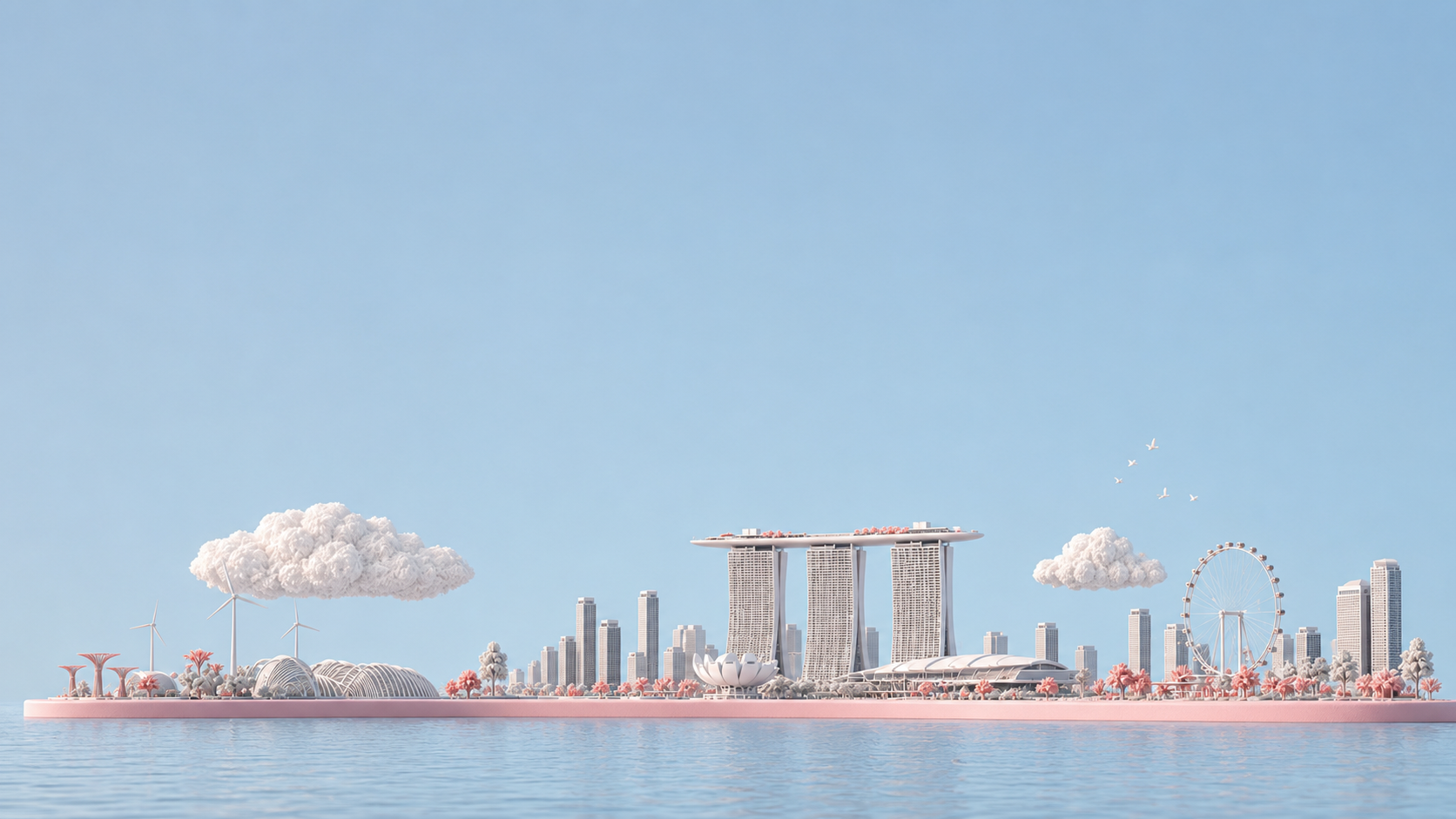
The horizon stays open. The engine continues if the work holds.
Images act as chapter markers, metaphor anchors and civic mood-setters. Text, image, caption and sequence work as one system.
// A reader knows which voice they are inside within three words. Typography, alignment and grammar do the work: no labels needed.
First person, slow and specific. It carries the reader's everyday vantage without becoming a technical explainer.
The bill arrives on the same day every month.
Observed, present tense and disciplined. The otter is the witness: evidence of conditions holding, not a mascot.
They are not symbols. They are tenants.
The editors' voice holds the foreword, the opening observation, the reference spread and the close.
This publication is written from the opposite direction. It is written to look.
// Miniature civic worlds, a drawn waterline, muted paper grounds. A palette built on paper, navy and coral, with expanded atmospheric colours used only where the reference set supports them.
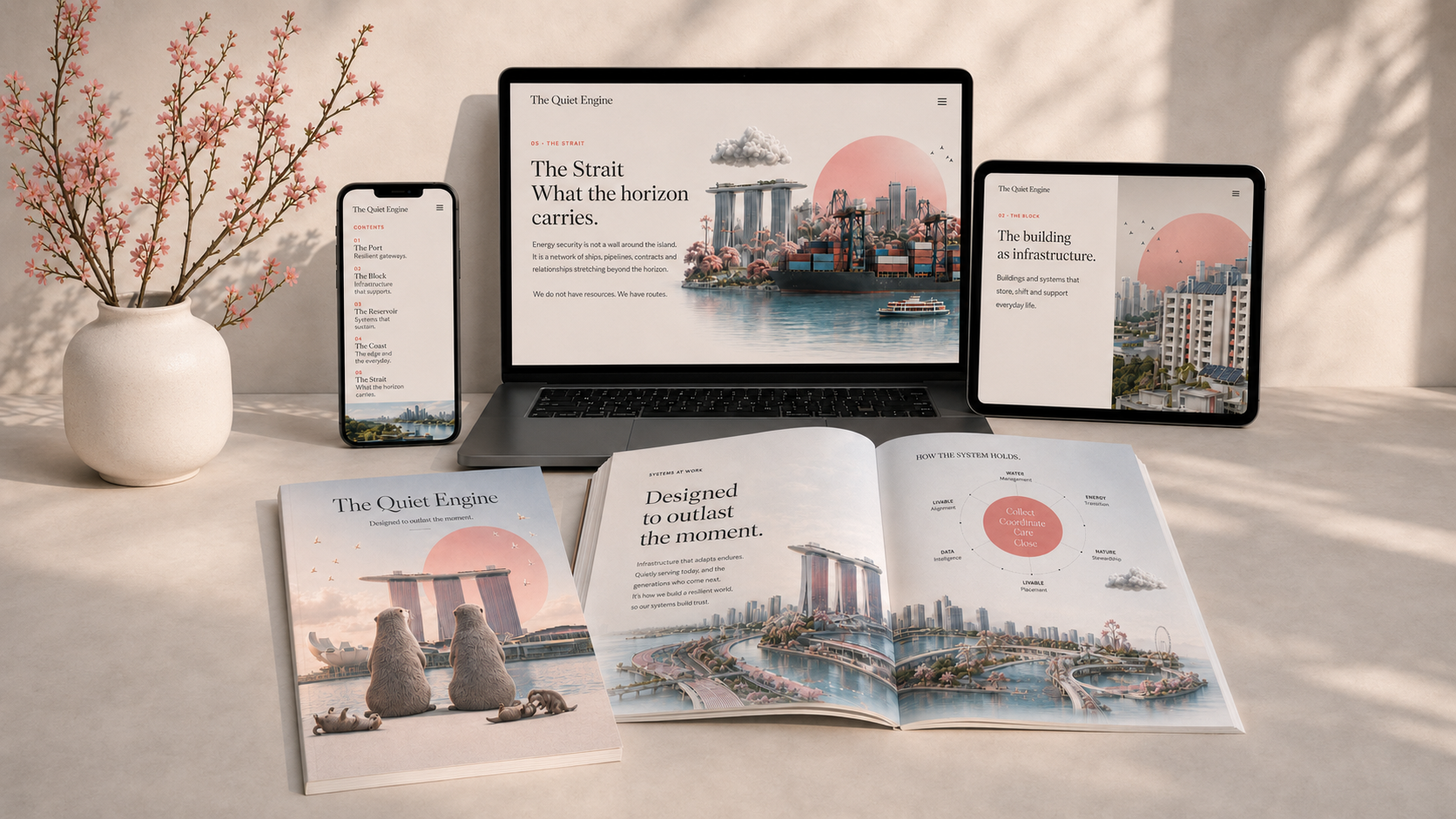
The Quiet Engine wordmark and publication cover title treatment. SoftCity-inspired, elegant and restrained.
Publication body texture and direct excerpts. Used only when the publication itself is speaking.
Case-page body copy, captions, labels, metadata, buttons and technical notes.
// Five templates hold different voices, image densities and chapter jobs without losing coherence.
For chapters where the citizen encounter carries the spread alone, with an image or a quiet holding panel opposite.
For The Strait: citizen text, an image area, and a short otter closing passage held at the waterline.
For The Bay: citizen and otter voices hold equal weight, divided by the waterline.
For the foreword, opening observation, Four Switches reference and closing frame.
Muted horizon image, a citizen close, one earned otter line and a quiet coral marker.
// The six scales form a guided digital publication, moving from the bill to the horizon through persistent chapter navigation, full-screen editorial imagery and restrained explanatory layers.
A guided movement from domestic experience to regional and future systems.
Readers can move between chapters without losing their place.
Observations, explanatory notes and chapter imagery unfold at different depths.
The visual and narrative hierarchy adapts across desktop, tablet and mobile.
// Speed of exploration never replaced strategy, selection or restraint.
Material read for civic complexity, recurring themes, reader friction and claim risk.
The subject reorganised into six scales of attention: a route the reader can remember.
Three voices locked; AI-assisted exploration tested atmosphere, waterline logic and metaphor.
Outputs filtered for restraint and honest framing, then translated into publication, design system and case page.
// Every part of The Quiet Engine maps to a service you can commission on its own.
Narrative architecture, reader journey design, voice systems, chapter sequencing and technical simplification without flattening the subject.
START HERE →Title, tone, palette, typography and the logic that holds the visual identity together.
START HERE →Translation of publication logic into a structured digital experience, content hub or campaign microsite.
START HERE →Accelerated visual exploration governed by human strategy, selection and editorial judgement.
START HERE →No. The Quiet Engine is a Synthminds concept study. The subject, Singapore's energy transition, is real and publicly documented, but no agency commissioned, endorsed or reviewed this work.
Content strategy. The case demonstrates narrative architecture, a three-voice system, technical simplification and a completed digital publication, with brand strategy, website strategy and AI-assisted visual work in support.
AI image generation accelerated visual exploration: testing atmosphere, waterline logic and palette directions at speed. Human editorial judgement decided what survived. AI did not author the system.
Yes. The same method applies to dense civic, technical, healthcare, sustainability or corporate subjects: reorganise the material by reader attention, lock the voices, and build a visual system others can follow.
The Quiet Engine is an independent Synthminds editorial work based on publicly available information. Public information was checked against official Singapore sources on 17 July 2026. Policies, targets and project status may change after publication.
The Quiet Engine is an independent Synthminds editorial work. © 2026 Synthminds. All rights reserved.
Synthminds turns technical, policy-heavy and invisible material into editorial systems people can understand, remember and share.
TALK TO US